

ATPL(A) Theoretical Distance Learning
The theory behind mastering flight.
Hexagone Aviation School’s online ATPL(A) theory course provides you with the essential knowledge needed to pursue a career in the cockpit of commercial airlines. Flexible, structured, and compliant with EASA requirements, the course combines e-learning, multiple-choice practice exercises, mock exams, and personalized academic support.

Duration
715 hours of training
Up to 24 months to learn at your own pace
Format
100% online
Avec semaines de révision sur site ou en visioconférence
Rates
À partir de 1 990 €
CPF, OPCO, France Travail ou autofinancement
Language
English
La langue de référence de l'aviation internationale
Maximum Enrollment
28 élèves
Par session pour favoriser les échanges pédagogiques
WHAT IS THE ATPL(A) THEORY EXAM?
The essential academic foundation for airline pilots
L’ATPL(A) théorique constitue l’étape académique majeure du parcours de pilote de ligne. Bien avant les formations pratiques professionnelles et l’accès aux cockpits des compagnies aériennes, cette formation permet aux futurs pilotes de développer les connaissances, les méthodes de réflexion et la compréhension globale du monde aéronautique nécessaires à l’exercice du métier.
Conçue pour préparer les élèves aux exigences du transport aérien moderne, elle apporte les bases indispensables à la compréhension des opérations aériennes, de l’environnement technique des avions, de la sécurité des vols et du fonctionnement général de l’aviation commerciale. Cette phase théorique joue un rôle fondamental dans la construction du raisonnement d’un futur pilote professionnel et dans sa capacité à analyser, anticiper et prendre des décisions dans un environnement complexe.
La formation s’organise autour de 14 examens théoriques officiels et peut être suivie selon différents rythmes d’apprentissage, généralement sur une période comprise entre 6 et 24 mois selon le parcours choisi. Tout au long de la formation, les élèves évoluent progressivement vers une compréhension plus approfondie des mécanismes du vol, des procédures opérationnelles et des standards utilisés dans les compagnies aériennes.
Au-delà de la réussite aux examens, l’ATPL(A) théorique représente surtout une véritable transition vers une approche professionnelle de l’aéronautique. Elle permet aux élèves pilotes d’acquérir les connaissances et la rigueur attendues dans le secteur aérien avant de poursuivre vers les formations pratiques professionnelles menant aux qualifications de pilote de ligne.
Why is the ATPL(A) Theory Course essential?
The ATPL(A) Theory course is much more than just exam preparation. This training provides the academic foundation upon which the entire professional pilot career is built. The knowledge gained enables students to understand how aircraft operate, the international regulatory environment, human factors, meteorology, air navigation, and the operational procedures used daily by airlines.
This step is now essential for all candidates seeking to obtain a CPL(A) and IR. It also prepares future pilots to work in a demanding environment where decision-making, risk analysis, and the management of complex situations are central to the job.
A training program recognized throughout Europe
The ATPL(A) ground school offered by Hexagone Aviation School complies with the requirements of the European PART-FCL regulation and prepares students for the official exams administered by the DGAC.
The certificates awarded are recognized throughout all EASA member states, enabling students to pursue their careers both in France and internationally. This European recognition is a significant advantage for candidates considering a career with airlines, in business aviation, or with specialized operators.
A step toward the airlines
The ATPL(A) Theory course often serves as a student’s first introduction to the professional world of air transport. Beyond simply passing the exams, this training helps students develop the work methods and attention to detail expected in the aviation industry.
The knowledge gained during this phase will be applied throughout the training program, particularly during CPL(A), IR-ME, and MCC training, as well as during future type ratings. It also serves as the foundation for technical discussions among pilots, instructors, air traffic controllers, and operational services.
For this reason, many airlines consider the ATPL(A) Theory course to be one of the most important steps in training a future airline pilot.
THE JOURNEY
Become an airline pilot
PPL(A)
Private Pilot License
Basic piloting skills and gaining initial flight experience.
Night Rating
Night VFR Rating
Expansion of private pilot privileges and familiarization with night operations.
ATPL(A) Theoretical Training
Theoretical Training for Airline Pilots
Acquisition of the aeronautical knowledge necessary to practice the profession of a commercial pilot.
Hour Building
Design of the aviation experiment
Accumulating flight hours and developing independence prior to professional training.
MEP
Multi-engine rating
Training on multi-engine aircraft that qualifies students for advanced professional programs.
CPL(A)
Commercial Pilot License
Obtaining the necessary qualifications to work as a commercial pilot.
IR-ME
Instrument Rating
Proficiency in flying without external visual references in a multi-engine aircraft.
MCC
Multi-Crew Cooperation
Learning how to work as part of a crew and the procedures used by airlines.
UPRT
Upset Prevention and Recovery Training
Prevention and recovery from unusual in-flight situations.
A DREAM. A GOAL. A CAREER.
Et si votre prochain bureau était un cockpit ?
Pilots make decisions every day.
Yours could change your future.
ADMISSION REQUIREMENTS
The essential requirements for admission to the program.
These prerequisites ensure a consistent training environment that is tailored to the requirements of the ATPL(A) theoretical course and the progress of future professional pilots.
Minimum age
Must be at least 17 years old at the start of the training program.
PPL(A) License
Required for admission to the theoretical course.
English proficiency
A good understanding of English is recommended.
Scientific basis
High school-level mathematics and physics are recommended.
Computer equipment
A personal computer and an internet connection are required.
Availability
Consistency and personal commitment are essential.
Placement at the start of the program
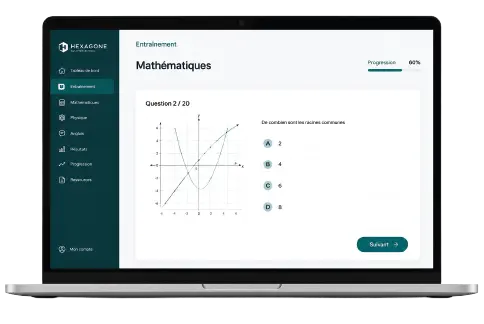
Before you begin the course, an assessment will be conducted to evaluate your knowledge of the subjects required for the ATPL(A) Theory program. This assessment covers mathematics, physics, and English proficiency. A free practice platform is available to help you prepare as effectively as possible.
The expected knowledge level generally corresponds to a high school level in mathematics and physics, as well as a good understanding of written English. The purpose of this assessment is not to select candidates, but to identify any potential support needs before the program begins.
PRACTICAL INFORMATION
The essentials at a glance.
A clear and flexible structure designed to provide you with the best conditions for learning and success
Duration
28
Maximum Capacity
28
Maximum Capacity
28
Academic Director
28
Academic Director
28
Rates
1990,00 €
Training Location
Beauvais
Maximum Capacity
28
Administrative Manager
28
Administrative Manager
28
AT THE HEART OF TRAINING
A structured training program to help you advance.
Each step of the educational program has been designed to help you acquire the knowledge, methods, and skills required in the professional aviation industry.
LEARNING OBJECTIVES
Build the theoretical foundation for professional pilots.
The ATPL(A) Theory course provides students with the academic and operational knowledge essential for a career as a pilot. Students develop a thorough understanding of aviation regulations, meteorology, navigation, flight mechanics, human performance, and the operational procedures used in commercial aviation.
Beyond exam preparation, this educational phase aims to develop rigorous study habits, analytical skills, and a comprehensive understanding of the modern aviation industry. It serves as the foundation upon which practical training and professional certifications will subsequently be built.
CAREER GOALS
Prepare students for a career in the aviation industry.
The ATPL(A) Theory course is a crucial step on the path to careers in the aviation industry and the airline environment. The knowledge gained is directly applied during CPL(A), IR-ME, and MCC training, and continues to be used throughout a professional pilot’s career.
This program also prepares students for the safety, decision-making, and crew-based work requirements specific to modern aviation operations. It thus serves as a valuable stepping stone to airlines, business aviation, and other sectors of the professional aviation industry.
TRAINING ORGANIZATION
A structured program designed to guide you through the process leading up to the official exams.
Pensé pour s’adapter à votre rythme d’apprentissage, le parcours ATPL(A) Théorique en distanciel combine formation eLearning, accompagnement pédagogique et préparation progressive aux examens officiels afin de vous accompagner jusqu’à l’obtention de vos certificats théoriques.
REGISTRATION
Votre parcours débute par la validation de votre inscription et la mise en place de votre environnement pédagogique. Une fois votre dossier finalisé, vous accédez à l'ensemble des ressources nécessaires au suivi de votre formation ainsi qu'aux outils qui vous accompagneront tout au long de votre progression.
FORMATION ELEARNING
La phase d'apprentissage eLearning vous permet d'étudier les matières du programme ATPL(A) à votre rythme, selon vos disponibilités. Grâce à une plateforme pédagogique accessible en ligne, vous progressez progressivement dans l'acquisition des connaissances théoriques requises pour les examens officiels.
SEMAINE DE RÉVISION
Chaque module est suivi d'une semaine de révision intensive destinée à consolider les connaissances acquises durant la phase eLearning. Encadrée par nos instructeurs, cette étape permet de revenir sur les points essentiels du programme et de préparer efficacement les examens officiels.
EXAMENS DGAC
À l'issue de chaque phase de préparation, vous présentez les examens officiels de la DGAC correspondant aux matières étudiées. Cette organisation permet une validation progressive des certificats théoriques tout au long de la formation.
CERTIFICATION PROGRESSIVE
Le programme est conçu pour permettre une progression structurée et une validation progressive des certificats ATPL(A). Chaque étape franchie vous rapproche de l'obtention complète de l'ATPL(A) Théorique et de la poursuite de votre parcours vers les qualifications professionnelles.
REGISTRATION
Votre parcours débute par la validation de votre inscription et la mise en place de votre environnement pédagogique. Une fois votre dossier finalisé, vous accédez à l'ensemble des ressources nécessaires au suivi de votre formation ainsi qu'aux outils qui vous accompagneront tout au long de votre progression.
FORMATION ELEARNING
La phase d'apprentissage eLearning vous permet d'étudier les matières du programme ATPL(A) à votre rythme, selon vos disponibilités. Grâce à une plateforme pédagogique accessible en ligne, vous progressez progressivement dans l'acquisition des connaissances théoriques requises pour les examens officiels.
SEMAINE DE RÉVISION
Chaque module est suivi d'une semaine de révision intensive destinée à consolider les connaissances acquises durant la phase eLearning. Encadrée par nos instructeurs, cette étape permet de revenir sur les points essentiels du programme et de préparer efficacement les examens officiels.
EXAMENS DGAC
À l'issue de chaque phase de préparation, vous présentez les examens officiels de la DGAC correspondant aux matières étudiées. Cette organisation permet une validation progressive des certificats théoriques tout au long de la formation.
CERTIFICATION PROGRESSIVE
Le programme est conçu pour permettre une progression structurée et une validation progressive des certificats ATPL(A). Chaque étape franchie vous rapproche de l'obtention complète de l'ATPL(A) Théorique et de la poursuite de votre parcours vers les qualifications professionnelles.
ON THE PROGRAM
14 modules compliant with EASA standards.
All of the mandatory theoretical subjects required to obtain the ATPL(A) airline transport pilot license, in accordance with European Part-FCL regulations.
- 14 EASA regulatory modules
- Content updated in accordance with European requirements
- Course materials, videos, and multiple-choice question bank
- Practice exams and academic progress tracking
- Structured support throughout the process
Module 010 - Air Law
Module Objectives:
- Master air traffic rules and the responsibilities of various stakeholders,
- Understand the rights and obligations associated with aircraft operation,
- Identify European and international regulations applicable to the pilot profession,
- Demonstrate compliance in normal and abnormal situations.
Module Content:
- International Air Law
- Airworthiness and Registration
- Personnel Licensing and Qualifications
- Rules of the Air
- Air Operations
- Air Traffic Services (ATS) and Air Traffic Management (ATM)
- Aeronautical Information Service (AIS)
- Aerodromes and Infrastructure
- Air Transport Facilitation (ICAO Annex 9)
- Search and Rescue (SAR)
- Aviation Security (ICAO Annex 17)
- Accident and Incident Investigation
Upon completion of this module, you will be able to operate confidently within a strictly regulated aviation environment and integrate these requirements into your future professional pilot duties.
Module 021 - Airframe, Systems, and Powerplant
Module Objectives:
- Understand the design and structural constraints of an aircraft, as well as the principles of preventive and corrective maintenance.
- Identify the various systems comprising the airframe, their roles, and their interactions.
- Master the operation of hydraulic, pneumatic, electrical, and air conditioning systems.
- Understand the operating principles of piston and turbine engines, as well as their associated systems.
- Be able to diagnose and anticipate potential failures to ensure flight safety and performance.
Module Content:
- Design, Loads, Stresses, and Maintenance : principles of structural design, material strength, fatigue cycles, scheduled and corrective maintenance.
- Airframe : fuselage, wings, empennages, materials used, system integration.
- Hydraulic Systems : components, operation, primary and secondary circuits, safety and redundancy.
- Landing Gear, Wheels, Tires, and Brakes : architecture, retraction mechanisms, braking systems, operational limitations.
- Flight Controls : primary and secondary controls, mechanical, hydraulic, and electrical systems, actuators, and trim systems.
- Pneumatic Systems — Pressurization and Air Conditioning : compressed air generation, cabin pressurization regulation, air conditioning.
- Anti-icing and De-icing Systems : aerodynamic and engine protection, utilized technologies (thermal, pneumatic, electrical).
- Fuel Systems : tanks, pumps, supply circuits, fuel management and balancing.
- Electrical Systems : power sources, AC/DC networks, distribution, electrical protection.
- Piston Engines : thermodynamic principles, architecture, operation, and maintenance.
- Turbomachinery : turbine engines, thermodynamic cycles, main components, limitations.
- Protection and Detection Systems : fire detection, suppression, various alarms and sensors.
- Oxygen Systems : fixed and portable systems, masks, regulators, emergency use.
Module 022 - Instrumentation
Module Objectives:
- Understand the role and operation of onboard instruments and systems essential for safe flight operations.
- Be able to interpret data provided by sensors, measurement systems, and electronic displays.
- Master the use of automatic flight control, flight management, and assistance systems.
- Identify the principles of inertial navigation, flight parameter measurement, and performance management.
- Be familiar with maintenance and monitoring procedures and tools related to modern instrumentation.
Module Content:
- Sensors and Instruments : operating principles, sensor types, data conversion and transmission.
- Aerodynamic Parameter Measurement : indicated airspeed, altitude, Mach, temperature, anemometry, Pitot and static probes.
- Magnetism — Compass and Fluxgate Magnetometer : terrestrial magnetism, compass errors, principles of the magnetic compass and flux valve.
- Gyroscopic Instruments : artificial horizons, heading indicators, inclinometers, mechanical and laser gyroscopes.
- Inertial Navigation : inertial platforms, ring laser gyros, integration with other navigation systems.
- Automatic Flight Control Systems (AFCS) : autopilot, hold and tracking modes, trajectory management.
- Trims, Yaw Damper, and Flight Envelope Protections : flight trim, oscillation reduction, stall and overspeed protection systems.
- Autothrottle — Automatic Thrust Control Systems : operation, integration with FMS, modes of use.
- Communication Systems : VHF/HF radios, datalink, CPDLC, interphone and PA systems.
- Flight Management Systems (FMS/FMGS) : flight planning, 4D navigation, performance and fuel management.
- Warning and Proximity Systems : GPWS/EGPWS, TCAS, engine and system alerts, message prioritization.
- Integrated Instruments and Electronic Displays : EFIS, PFD, ND, EICAS/ECAM, information presentation philosophy.
- Maintenance, Monitoring, and Recording : diagnostic systems, flight recorders, preventive maintenance.
- Digital Circuits and Computers : onboard computing architecture, data processing, redundancy, and reliability.
Targeted Competencies
Upon completion of this module, you will be able to:
- Explain the operation of primary flight and navigation instruments.
- Effectively utilize automatic systems to optimize pilot workload.
- Correctly interpret information from analog or digital displays.
- Understand the integration of various systems within a modern avionics suite.
- Identify maintenance and monitoring procedures to ensure instrumentation reliability.
Module 031 - Mass and Balance
Module Objectives:
- Understand the importance of mass and balance calculations for flight safety and performance.
- Be able to apply methods for calculating an aircraft's center of gravity and total mass.
- Identify structural and operational limitations related to weight and load distribution.
- Master best practices for cargo loading, handling, and securing.
- Be able to anticipate and correct balance issues prior to takeoff.
Module Content:
- Purpose of Mass and Balance Considerations : influence on flight performance, stability, and safety; regulatory compliance.
- Loading : principles of mass distribution, compartment limitations, cargo securing, consideration of passengers, baggage, fuel, and freight.
- Aircraft-Specific Mass and Balance Details : operational empty weight (OEW), maximum takeoff weight (MTOW), maximum landing weight (MLW), taxi limitations, manufacturer's tables and diagrams.
- Determination of Center of Gravity (CG) Position : calculation methods, use of lever arms, moments, graphs, and balance envelopes.
- Cargo Handling : loading and unloading techniques, prevention of in-flight load shifts, adherence to aviation safety and handling standards.
Targeted Competencies
Upon completion of this module, you will be able to:
- Assess whether a load complies with the aircraft's mass and balance limits.
- Accurately calculate the total mass and the center of gravity position.
- Utilize manufacturer-provided documentation to verify compliance with operational limitations.
- Organize and supervise aircraft loading to ensure safety and operational efficiency.
Module 032 - Aircraft Performance
Module Objectives:
- Understand the fundamental principles of aeronautical performance and their influence on operational safety and efficiency.
- Master regulatory concepts related to performance, particularly those aligned with CS-23 and CS-25 requirements.
- Be proficient in interpreting and utilizing performance data for both single-engine and multi-engine aircraft.
- Optimize flight planning based on performance limitations, environmental conditions, and takeoff weight.
- Be capable of making informed operational decisions, considering both the actual and theoretical performance characteristics of the aircraft.
Module Content:
- Overview : key definitions, factors influencing performance (mass, density altitude, wind, temperature, configuration).
- CS-23 — Performance Theory (Performance Class B) : requirements applicable to light aircraft, takeoff and landing distances, climb, cruise, approach, single-engine limitations.
- CS-23 — Utilization of Performance Data : interpretation of manufacturer's tables and graphs, adjustments based on actual conditions, application to single-engine and multi-engine aircraft.
- CS-25 — Performance Theory (Performance Class A) : requirements for transport aircraft, balanced field length calculations, characteristic speeds (V1, VR, V2), climb profiles, engine failure procedures.
- CS-25 — Utilization of Performance Data : interpretation and application of Aircraft Flight Manuals (AFM), adjustments based on environmental factors and aircraft configuration, performance optimization for safety and economic efficiency.
Targeted Competencies
Upon completion of this module, you will be able to:
- Understand and apply CS-23 and CS-25 regulations pertaining to aircraft performance.
- Accurately utilize manufacturer-provided performance data for flight planning.
- Adapt performance calculations to varying environmental conditions and emergency scenarios.
- Make operational decisions aimed at ensuring flight safety, efficiency, and regulatory compliance.
Module 033 - Flight Planning and Monitoring
Module Objectives:
- Acquire the requisite skills for preparing VFR or IFR flights in compliance with regulations and operational procedures.
- Be proficient in utilizing GSPRM charts (VFR and IFR) for flight planning and navigation.
- Master fuel calculation and management methodologies in accordance with operational requirements.
- Conduct a comprehensive pre-flight preparation, integrating weather, performance, weight and balance, and airspace constraints.
- Accurately complete and interpret an ICAO flight plan.
- Ensure precise in-flight monitoring and adapt flight planning en route as required.
Module Content:
- VFR Flight Planning : utilization of VFR GSPRM charts, route selection, cruise altitudes, turning points, and estimation of flight time and fuel consumption.
- IFR Flight Planning : utilization of GSPRM IFR charts, selection of air routes, SIDs/STARs, flight levels, and estimated time and fuel.
- Fuel Planning — Operational Requirements : trip fuel, reserve fuel, alternate and holding fuel, regulatory margins.
- Pre-flight Preparation : collection and analysis of NOTAMs, meteorological forecasts (METAR, TAF, SIGWX), temporary restrictions, performance calculations, and airworthiness verification.
- ICAO Flight Plan : ATS FPL format, fields to be completed, equipment codification, and submission deadlines and procedures.
- In-flight Monitoring and Re-planning : monitoring techniques, comparison of forecasts versus actual conditions, route adaptation, fuel management, diversions, and operational decisions.
Targeted Competencies
Upon completion of this module, you will be able to:
- To plan a VFR or IFR flight comprehensively and compliantly.
- To effectively utilize GSPRM charts to establish an optimized route.
- To calculate the required fuel, taking into account regulatory and operational margins.
- To prepare a correctly completed ICAO flight plan.
- To ensure precise in-flight monitoring and make appropriate decisions in the event of changing conditions.
Module 040 - Human Factors and Limitations
Module Objectives:
- To understand the fundamentals of human factors in aviation and their impact on operational safety.
- To identify a pilot's physiological and psychological limitations and understand how to manage them.
- To understand the principles of health and lifestyle hygiene necessary for maintaining optimal performance.
- To master the fundamentals of aviation psychology to optimize decision-making and the management of critical situations.
Module Content:
- Human Factors: Basic Concepts
- Definition and importance of human factors in aviation.
- Human error models (SHEL, Reason, Dirty Dozen).
- Human-machine interaction and Crew Resource Management (CRM).
- Fundamentals of Aviation Physiology and Health Maintenance
- Effects of Altitude: hypoxia, desaturation, decompression.
- Fatigue, sleep, and circadian rhythm.
- Hydration, nutrition, physical fitness, and lifestyle hygiene.
- Effects of drugs, alcohol, and medication on performance.
- Fundamentals of Aviation Psychology
- Perception, attention, and memory in an operational context.
- Stress and workload management.
- Interpersonal communication and in-flight decision-making.
- Cognitive and emotional factors influencing safety.
Targeted Competencies
Upon completion of this module, you will be able to:
- Recognize and anticipate human limitations that may affect flight safety.
- Apply best practices to maintain optimal physiological and psychological performance.
- Identify signs of stress, fatigue, or cognitive overload and respond effectively.
- Integrate the human factor into risk management and operational decision-making.
Module 050 - Meteorology
Module Objectives:
- Understand the fundamental principles of meteorology and their influence on aviation operations.
- Be able to interpret and anticipate meteorological phenomena that may affect the safety and efficiency of a flight.
- Master the reading, interpretation, and utilization of aeronautical meteorological documents.
- Identify in-flight meteorological hazards and adapt flight planning or conduct accordingly.
Module Content:
- The Atmosphere : composition, vertical structure, temperature and pressure variations, general circulation.
- Wind : formation, forces involved (Coriolis, friction), wind types (geostrophic, gradient, local), shear.
- Thermodynamics : gas laws, humidity, dew point, atmospheric stability, dry and moist adiabatic processes.
- Clouds and Fog : classification, formation mechanisms, visual identification, prediction of their evolution.
- Precipitation : types (rain, snow, hail, drizzle), formation processes, operational impacts.
- Air Masses and Fronts : characteristics, formation, movement, phenomena associated with different front types.
- Pressure Systems : depressions, anticyclones, convergence lines, tropical cyclones, vortices.
- Climatology : climatic zones, seasonal variations, recurrent phenomena (monsoons, trade winds).
- Meteorological Hazards for Flight : icing, thunderstorms, turbulence, microbursts, volcanic ash.
- Meteorological Information : sources (METAR, TAF, SIGMET, AIRMET, weather charts), interpretation and use for flight planning and monitoring.
Targeted Competencies
Upon completion of this module, you will be able to:
- Analyze the meteorological situation and anticipate its effects on a flight.
- Identify meteorological risks and apply preventive or corrective measures.
- Effectively utilize aeronautical weather products for flight planning and in-flight monitoring.
- Integrate meteorological data into operational decision-making to optimize safety and performance.
Module 061 - General Navigation
Module Objectives:
- Understand the fundamental principles of air navigation and their in-flight application.
- Master VFR navigation by utilizing visual references and track-keeping techniques.
- Understand and apply the concepts of great circles and rhumb lines to optimize air routes.
- Be able to interpret and utilize various types of aeronautical charts.
- Understand and apply the principles of time measurement in navigation and their relation to geographical position.
Module Content:
- Fundamentals of Navigation : definitions, geographical coordinate system, latitude and longitude, heading, track, and drift.
- VFR Navigation : use of visual references, position estimation, track keeping, heading tracking techniques.
- Great Circles and Rhumb Lines : definition, optimal route calculations, comparison of advantages and disadvantages based on flight type.
- Charts : projection types (conformal, equidistant, azimuthal), GSPRM charts, scales, aeronautical symbols and legends.
- Time : UTC, local, and legal times, time zones, equation of time, conversion and use for navigation.
Targeted Competencies
Upon completion of this module, you will be able to:
- Explain the principles of navigation and apply the corresponding calculation methods.
- Effectively utilize VFR navigation charts and tools.
- Select the most appropriate route based on distance and operational constraints.
- Properly manage in-flight time conversion and utilization to ensure accuracy and safety.
Module 062 - Radio Navigation
Module Objectives:
- Understand the fundamental principles of radio propagation and their application to aeronautical navigation.
- Understand radio navigation aids and their in-flight use.
- Master the principles and uses of radar in air navigation and surveillance.
- Be able to use and interpret data from GNSS systems.
- Apply the principles of Performance-Based Navigation (PBN) in an operational context.
Module Content:
- Basic Theory of Radio Propagation : nature of electromagnetic waves, frequency ranges used in aviation, free-space propagation, effects of the troposphere and ionosphere, interference and limitations.
- Radio Aids :
- NDB/ADF: principles, operation, limitations, and errors.
- VOR: Conventional and Doppler VOR, use for navigation and radials.
- DME: Distance measurement, principles, and integration with other aids.
- ILS: Localizer, glide slope, markers, Category I/II/III.
- VDF: Radio direction finding, principles, and applications.
- Radar: Operation, types (primary, secondary SSR), Mode A/C/S, use for navigation and surveillance.
- GNSS Systems: GPS, GLONASS, Galileo, triangulation principles, accuracy, integrity, and limitations.
- Performance-Based Navigation (PBN): Key concepts, RNAV, RNP, performance specifications, operational and regulatory requirements.
Targeted Competencies
Upon completion of this module, you will be able to:
- Explain the operation of major radio navigation systems.
- Effectively utilize radio aids to determine and follow a route.
- Interpret radar and GNSS information within an operational context.
- Apply PBN principles to optimize navigation accuracy and safety.
Module 070 - Operational Procedures
Module Objectives:
- Understand the general requirements governing air operations in accordance with current regulations.
- Identify and manage specific operational procedures and the risks associated with certain particular operations.
- Master the specific regulatory requirements related to specialized operations under amended Regulation (EU) No 965/2012.
Module Content:
- General Requirements: Regulatory obligations, operator responsibilities, safety management, operational documentation, compliance with air rules.
- Special Operational Procedures and Associated Hazards: General aspects of high-risk operations, specific conditions, risk management, communication and coordination with authorities.
- Specialized Operations: European regulation (EU 965/2012), types of operations (specialized flights, aerial work, complex commercial operations), specific requirements for qualification, maintenance, equipment, and security.
Targeted Competencies
Upon completion of this module, you will be able to:
- Apply general regulatory requirements to all your air operations.
- Identify risks and adapt procedures according to specific operations.
- Integrate the specific obligations of specialized operations into mission planning and execution.
Module 081 - Principles of Flight – Aeroplanes
Module Objectives:
- Understand the fundamental aerodynamic principles governing aircraft flight in subsonic and supersonic regimes.
- Identify and master critical phenomena such as stall, Mach tuck, and loss of control situations, as well as prevention and recovery techniques.
- Understand the principles of aircraft stability and control to ensure safe and precise flight operations.
- Comprehend the flight limitations associated with the aerodynamic and mechanical characteristics of aircraft.
- Understand the operational principles of propellers and their influence on aircraft performance.
- Master the fundamentals of flight mechanics to optimize aircraft performance and operational safety.
Module Content:
- Subsonic Aerodynamics: principles of lift, drag, airflow around airfoils, Bernoulli's principle, and the effects of speed and angle of attack.
- High-Speed Aerodynamics: transonic and supersonic phenomena, compressibility, shock waves, and modifications to lift and drag.
- Stall, Mach Tuck, and Prevention/Recovery from Destabilizing Situations: stall mechanisms, identification of warning signs, recovery techniques, and the effects of Mach tuck.
- Stability: longitudinal, lateral, and directional stability; pitch, roll, and yaw moments; and the role of control surfaces.
- Control: principles of piloting, primary and secondary control surfaces, control inputs, and control feedback.
- Limitations: maximum speed, stall speed, structural limits, and environmental factors.
- Propellers: operating principle, types, efficiency, variable pitch, and effects on aircraft behavior.
- Flight Mechanics: forces in flight, equations of motion, trajectories, maneuvers, and performance.
Targeted Competencies
Upon completion of this module, you will be able to:
- Explain the essential aerodynamic phenomena of flight and their influence on aircraft behavior.
- Identify and manage stall situations and other instances of loss of control.
- Ensure precise and stable control of the aircraft while adhering to its operational limits.
- Understand and effectively utilize propeller propulsion systems.
- Apply mechanical principles to optimize flight safety and efficiency.
Module 090 - Communications
Module Objectives:
- Understand the fundamental concepts of aeronautical communications.
- Master the general operational procedures pertaining to in-flight communications.
- Be able to transmit and receive relevant meteorological information.
- Know the procedures to follow in the event of voice communication failure.
- Be capable of managing distress and emergency situations through radio communications.
- Understand the principles of VHF wave propagation and frequency management.
- Explore other means and techniques of aeronautical communication.
Module Content:
- Concepts : principles of communication, constituent elements of an aeronautical communication system, protocols.
- General Operational Procedures : call initiation, establishing contact, standard transmissions, phraseology, traffic management.
- Relevant Meteorological Information : formats and content of weather messages, in-flight transmission.
- Voice Communication Failure : identification, applicable procedures, alternative modes.
- Distress and Urgency Procedures : distress signals (MAYDAY, PAN-PAN), situation management, coordination with air traffic control.
- VHF Propagation and Frequency Allocation : characteristics of VHF waves, range, limitations, frequency planning.
- Other Communications : satellite communications, ACARS systems, automatic transmissions, data communications.
Targeted Competencies
Upon completion of this module, you will be able to:
- Correctly use aeronautical phraseology and adhere to communication protocols.
- Effectively transmit and receive meteorological and operational information.
- Apply the appropriate procedures in the event of voice communication failure.
- Manage emergency communications with composure and precision.
- Understand and explain the technical aspects related to VHF propagation and frequency management.
- Utilize alternative and advanced means of aviation communication.
Area 100 - Knowledge, Skills, and Attitudes (KSA)
Area Objectives:
- Integrate the key competencies defined by ICAO to ensure professional, safe, and efficient piloting.
- Develop the fundamental skills, behaviors, and knowledge necessary for Threat and Error Management (TEM).
- Enhance the ability to perform rapid and precise mental calculations, essential in operational situations.
Area Content:
- ICAO Core Competencies : communication, workload management, decision-making, situational awareness, leadership, and teamwork.
- Core Competency Learning Objectives : progressive development and evaluation of competencies related to safety and performance.
- Additional Threat and Error Management (TEM) : threat identification, prevention strategies, error control, adaptation to critical situations.
- Mental Calculation : techniques, exercises, and practical applications for rapidly solving numerical problems in flight (speed, time, distances, fuel consumption, etc.).
Targeted Competencies
Upon completion of this area, you will be able to:
- Effectively apply the key competencies recommended by ICAO in all flight phases.
- Identify and manage threats and errors to maintain a high level of safety.
- Perform accurate and rapid mental calculations for in-flight decision-making.
COMPÉTENCES & MÉTHODES
What you'll learn
- Be able to successfully complete all 14 ATPL(A) theoretical modules, which is a prerequisite for entering the CPL/IR/MCC flight training program.
- Comprendre et appliquer la réglementation aérienne européenne et internationale.
- Analyze an aircraft's performance and limitations: aerodynamics, mass and balance, and operational performance.
- Interpret weather data to make informed decisions in an operational setting.
- Understand how aircraft systems work: engines, instrumentation, structure, and related principles.
- Master VFR/IFR navigation, radio navigation, and the use of aeronautical charts.
What's included with your training
E-learning Course
Supports de cours complet
QCM thématiques
Mock Exams
Corrected Feedback
Dedicated Instructor
Semaine de révision
Accessible 24/7
Progress Tracking
Etudes de cas
Ressources téléchargeables
Assistance pédagogique
YOUR FUTURE TAKES OFF
Ready to start your training?
Our advisors are available to discuss your project and guide you through the process.
ASSESSMENT & CERTIFICATION
A program evaluated at each key stage.
Évaluation des acquis
L’évaluation est réalisée tout au long de la formation grâce à des QCM thématiques, des examens blancs et des revues pédagogiques régulières. Elle permet de vérifier l’acquisition progressive des connaissances conformément aux exigences EASA.
Mesure de la progression
Chaque élève bénéficie d’un suivi individualisé permettant d’identifier ses points forts, ses axes d’amélioration et son niveau de progression afin d’adapter l’accompagnement pédagogique lorsque nécessaire.
Taking exams
Les examens théoriques ATPL(A) sont organisés par la DGAC dans des centres agréés. Hexagone Aviation School accompagne les candidats dans leurs démarches administratives, leur préparation et le respect des échéances réglementaires.
Attestation de formation
À l’issue du parcours, une attestation de fin de formation est délivrée lorsque toutes les obligations pédagogiques ont été satisfaites. Elle permet au candidat de justifier de son éligibilité aux examens théoriques ATPL(A).
RNCP Recognized and Compliant Training
Bien que la formation ATPL(A) théorique ne soit pas directement enregistrée au RNCP (car encadrée par la réglementation européenne EASA), son contenu est pleinement conforme aux standards de qualification professionnelle reconnus à l’échelle européenne (Part-FCL / EASA).
Derrière chaque élève, une équipe engagée à ses côtés.
Une question. Un doute. Une difficulté.
Nous sommes là.
De votre inscription jusqu’à vos examens, notre équipe pédagogique vous accompagne à chaque étape de votre parcours. Formation, révisions, suivi de progression, conseils et orientation : nous sommes présents pour vous aider à avancer avec confiance vers votre objectif.
Former un pilote, ce n'est pas seulement transmettre des connaissances. C'est accompagner une personne dans un projet de vie.
LA RÉUSSITE DE NOS ÉLÈVES
Votre progression au cœur de notre démarche pédagogique.
Réussir une formation ATPL(A) Théorique ne consiste pas uniquement à étudier des cours et à passer des examens. C’est pourquoi nous mettons en place un environnement de formation conçu pour permettre à chaque élève d’évoluer dans les meilleures conditions tout au long de son parcours.
Un suivi régulier tout au long de la formation
Notre équipe pédagogique suit la progression des élèves afin d’identifier les éventuelles difficultés et d’apporter les conseils nécessaires au bon déroulement de la formation. L’objectif est de permettre à chacun d’avancer sereinement et de conserver une dynamique de travail adaptée à ses objectifs.
Une équipe disponible pour vous accompagner dans vos démarches
Au-delà de la formation elle-même, nos élèves peuvent compter sur une équipe disponible pour les aider dans leurs démarches administratives et pédagogiques. Inscription aux examens, organisation des sessions, financement de la formation ou questions liées au parcours de formation : nous restons présents pour apporter les informations et l’assistance nécessaires.
Des outils conçus pour favoriser la réussite
Plateforme eLearning, entraînements QCM, examens blancs, semaines de révision et indicateurs de progression permettent aux élèves de mesurer leurs acquis et de préparer efficacement les examens officiels. Chaque ressource a été pensée pour faciliter l’apprentissage et renforcer la confiance avant les épreuves.
Une attention particulière portée à l’expérience élève
Nous sommes convaincus que le bien-être et la sérénité des élèves contribuent directement à leur réussite. C’est pourquoi nous accordons une importance particulière à l’écoute, à la disponibilité de nos équipes et à la qualité de la relation entretenue avec chaque candidat tout au long de sa formation.
A rigorous, comprehensive, and well-structured program. The course materials are clear, the instructors are approachable, and the practice exams helped me pass all my modules on the first try.

Thibault H.
ATPL(A) Student – Class of 2024
A RECOGNIZED TRAINING PROGRAM
Un cadre exigeant pour une formation reconnue.
The ATPL(A) ground school program offered by Hexagone Aviation School operates within a strict and recognized regulatory framework, ensuring the quality of instruction, the compliance of the curriculum, and the recognition of the training program within the professional aviation sector.

ATO Certificate issued by the DGAC
Training organization approved by the Directorate General of Civil Aviation (DGAC) and supervised by the DSAC Nord.
Complies with EASA standards
Our training programs meet the European requirements for the training of professional pilots.

Qualiopi Certification
A quality certification attesting to the rigor of our educational and professional training programs.

Training program accredited by the RNCP
A program included in the framework of professional certifications recognized by France Compétences.

Registered training organization
Hexagone Aviation School is officially recognized as a vocational training organization by the Hauts-de-France region.
Imaginez
Un uniforme. Un équipage. Une destination.
Aujourd’hui, vous êtes devant votre écran, un manuel ouvert, à étudier des notions qui peuvent parfois sembler abstraites.
Dans quelques années, ces mêmes connaissances vous permettront de préparer un vol, de prendre des décisions en équipage et d’assurer la sécurité de dizaines, voire de centaines de passagers.
Chaque module validé, chaque heure consacrée à votre formation, chaque examen réussi constitue une étape supplémentaire vers cet objectif.
Votre aventure aéronautique ne commence pas dans un cockpit.
Elle commence ici.
A structured follow-up
We’ll discuss your background, your goals, and your plans so we can offer training tailored to your needs.
A structured follow-up
We’ll discuss your background, your goals, and your plans so we can offer training tailored to your needs.
A structured follow-up
We’ll discuss your background, your goals, and your plans so we can offer training tailored to your needs.
A structured follow-up
We’ll discuss your background, your goals, and your plans so we can offer training tailored to your needs.
ET APRÈS ?
Une étape vers votre carrière de pilote professionnel.
L’ATPL(A) Théorique constitue une étape incontournable vers les métiers du transport aérien. Cette formation permet d’acquérir les connaissances théoriques nécessaires à la poursuite d’un parcours professionnel menant vers les compagnies aériennes, l’aviation d’affaires ou d’autres secteurs spécialisés de l’aéronautique.
Professions cibles :
- Airline Pilot
- Pilote d'aviation d'affaires
- Pilote de travail aérien
- Instructeur de vol
Further Training Progression
Après la réussite des examens théoriques ATPL(A), les élèves poursuivent généralement leur progression vers les qualifications pratiques nécessaires à l’obtention d’une licence professionnelle.
- CPL(A) — Licence de pilote professionnel
- IR(A) — Qualification de vol aux instruments
- UPRT — Prévention et récupération des situations inhabituelles
- MCC — Formation au travail en équipage multi-pilote
HEXAGONE AVIATION JOBS
Trouvez votre prochaine opportunité dans l'aéronautique
Accédez aux offres d’emploi, programmes cadets, stages et recrutements de compagnies aériennes, opérateurs d’aviation d’affaires et organismes de formation partenaires.
FINANCEMENT
Financer une formation aéronautique, c'est préparer un projet de vie.
Devenir pilote exige un engagement important, tant sur le plan personnel que financier.
Chez Hexagone Aviation School, nous avons à cœur de rendre ce parcours accessible au plus grand nombre en vous accompagnant dans la recherche des solutions de financement les plus adaptées à votre situation.
Notre équipe reste à vos côtés à chaque étape pour étudier avec vous les options possibles et vous aider à concrétiser votre projet sereinement.
CPF, aides publiques, financement bancaire ou règlement échelonné : notre équipe vous aide à identifier les solutions adaptées à votre situation.
PARLONS DE VOTRE PROJET
Une équipe à votre écoute pour vous accompagner.
Premier échange
Needs Assessment
Proposition adaptée
Takeoff!
TRANSPARENCY & GUARANTEES
A clear framework designed to protect and support every student.
Hexagone Aviation School follows an educational, administrative, and contractual framework that complies with the requirements of vocational training and the standards of the aviation industry.
We are committed to building transparent relationships with each student, based on clear commitments, structured support, and respect for everyone’s rights.
Training agreements, teaching methods, financial terms, mediation policies, accessibility, support services, and regulatory obligations: all of our commitments are formalized in our contractual and institutional documents.
Cadre pédagogique
Notre organisation applique des procédures pédagogiques conformes aux exigences de l’EASA et de la formation professionnelle. Les objectifs, modalités d’apprentissage, méthodes d’évaluation et critères de réussite sont clairement définis et communiqués à chaque élève.
Engagement de transparence
Nous privilégions une relation de confiance fondée sur l’information, l’écoute et la clarté. Les conditions de formation, les aspects financiers, les modalités d’accompagnement et les droits des apprenants sont présentés de manière transparente tout au long du parcours.
ACCESSIBILITY & INCLUSION
Committed to equal opportunity, accessibility, and respect for everyone.
Hexagone Aviation School complies with regulatory requirements regarding accessibility, equal opportunity, mobility, and non-discrimination in the course of its training activities.
Promoting mobility
We support students from diverse regions and backgrounds and promote international mobility.
Promoting gender diversity in professions
We encourage people to pursue careers in the aerospace industry regardless of gender and support a diverse range of career paths.
Combating Discrimination
We adhere to a policy of respect, inclusion, and non-discrimination that is consistent with regulatory principles and the values of the aviation industry.
Promotion of gender equality
We are committed to ensuring equal treatment, access, and support for both women and men in all of our training activities.
Accessibility for people with disabilities
Support and accommodation measures can be explored to facilitate access to training based on identified needs.
These commitments are part of our quality approach and our compliance with current regulatory frameworks.